By SYDNEY J. FREEDBERG JR
 WASHINGTON: What long-range weapons should the Army purchase if President Trump keeps his hope to end the 1987 INF Treaty? The Intermediate-Range Nuclear Forces accord, despite its name, bans all ground-launched cruise in addition to ballistic missiles, nuclear or not, alongside ranges betwixt 310 in addition to 3,400 miles. So withdrawing from INF would opened upward up a lot of options — but which is best?
 It turns out that what y'all desire to create depends on what y'all desire to kill in addition to from how far away. That agency the U.S. needs a mix of missiles for different missions — in addition to it needs a different mix for a naval state of war inwards the vast Pacific against China than a dry reason state of war inwards Europe against Russia.
“Long-range precision fires, that’s our No. 1 priority,” Army Secretary Mark Esper said final week. “(They) would provide us the capability (to) either, for example, support the Air Force yesteryear suppressing enemy air defenses at hundreds upon hundreds of miles or back upward the Navy yesteryear engaging enemy surface ships at neat distances equally well.”
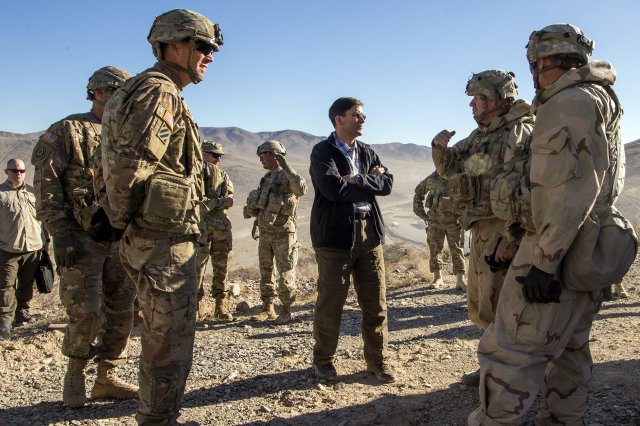
Army Secretary Mark Esper speaks to soldiers at the National Training Center on Fort Irwin, California
 “That is critical to multi-domain operations,” Esper added. That’s the chop-chop evolving interservice concept for defeating advanced adversaries withrelentless, coordinated attacks from all v domains of warfare: land, sea, air, space, in addition to cyberspace.
 But Esper’s examples are 2 distinctly different missions, each most relevant to a different home of war.
“The National Defense Strategy is actually clear,” said David Johnson, a one-time overstep advisor to the Army Chief of Staff who’s instantly alongside RAND. “The Source Link
WASHINGTON: What long-range weapons should the Army purchase if President Trump keeps his hope to end the 1987 INF Treaty? The Intermediate-Range Nuclear Forces accord, despite its name, bans all ground-launched cruise in addition to ballistic missiles, nuclear or not, alongside ranges betwixt 310 in addition to 3,400 miles. So withdrawing from INF would opened upward up a lot of options — but which is best? It turns out that what y'all desire to create depends on what y'all desire to kill in addition to from how far away. That agency the U.S. needs a mix of missiles for different missions — in addition to it needs a different mix for a naval state of war inwards the vast Pacific against China than a dry reason state of war inwards Europe against Russia.
“Long-range precision fires, that’s our No. 1 priority,” Army Secretary Mark Esper said final week. “(They) would provide us the capability (to) either, for example, support the Air Force yesteryear suppressing enemy air defenses at hundreds upon hundreds of miles or back upward the Navy yesteryear engaging enemy surface ships at neat distances equally well.”
Army Secretary Mark Esper speaks to soldiers at the National Training Center on Fort Irwin, California
“That is critical to multi-domain operations,” Esper added. That’s the chop-chop evolving interservice concept for defeating advanced adversaries withrelentless, coordinated attacks from all v domains of warfare: land, sea, air, space, in addition to cyberspace. But Esper’s examples are 2 distinctly different missions, each most relevant to a different home of war.
“The National Defense Strategy is actually clear,” said the Nazis’ never-finished V-3.
Tomorrow’s radars volition hold out faster, smarter, connected in addition to capable of performing multiple missions simultaneously. Learn how our engineers in addition to facilities are making it possible.
So which of these weapons would locomote best against what targets inwards what theaters? To answer, nosotros necessitate to empathise the basics of how they work.
WASHINGTON: What long-range weapons should the Army purchase if President Trump keeps his hope to end the 1987 INF Treaty? The Intermediate-Range Nuclear Forces accord, despite its name, bans all ground-launched cruise in addition to ballistic missiles, nuclear or not, alongside ranges betwixt 310 in addition to 3,400 miles. So withdrawing from INF would opened upward up a lot of options — but which is best? It turns out that what y'all desire to create depends on what y'all desire to kill in addition to from how far away. That agency the U.S. needs a mix of missiles for different missions — in addition to it needs a different mix for a naval state of war inwards the vast Pacific against China than a dry reason state of war inwards Europe against Russia.
“Long-range precision fires, that’s our No. 1 priority,” Army Secretary Mark Esper said final week. “(They) would provide us the capability (to) either, for example, support the Air Force yesteryear suppressing enemy air defenses at hundreds upon hundreds of miles or back upward the Navy yesteryear engaging enemy surface ships at neat distances equally well.”
Army Secretary Mark Esper speaks to soldiers at the National Training Center on Fort Irwin, California
“That is critical to multi-domain operations,” Esper added. That’s the chop-chop evolving interservice concept for defeating advanced adversaries withrelentless, coordinated attacks from all v domains of warfare: land, sea, air, space, in addition to cyberspace. But Esper’s examples are 2 distinctly different missions, each most relevant to a different home of war.
“The National Defense Strategy is actually clear,” said 760 mph at bounding main level. Supersonic cruise missiles make exist, such equally the Russo-Indian Brahmos, but the U.S. doesn’t receive got any. And inwards war, speed kills, because faster missiles are non exclusively harder to shoot downwardly but laissez passer on mobile targets less fourth dimension to hide.
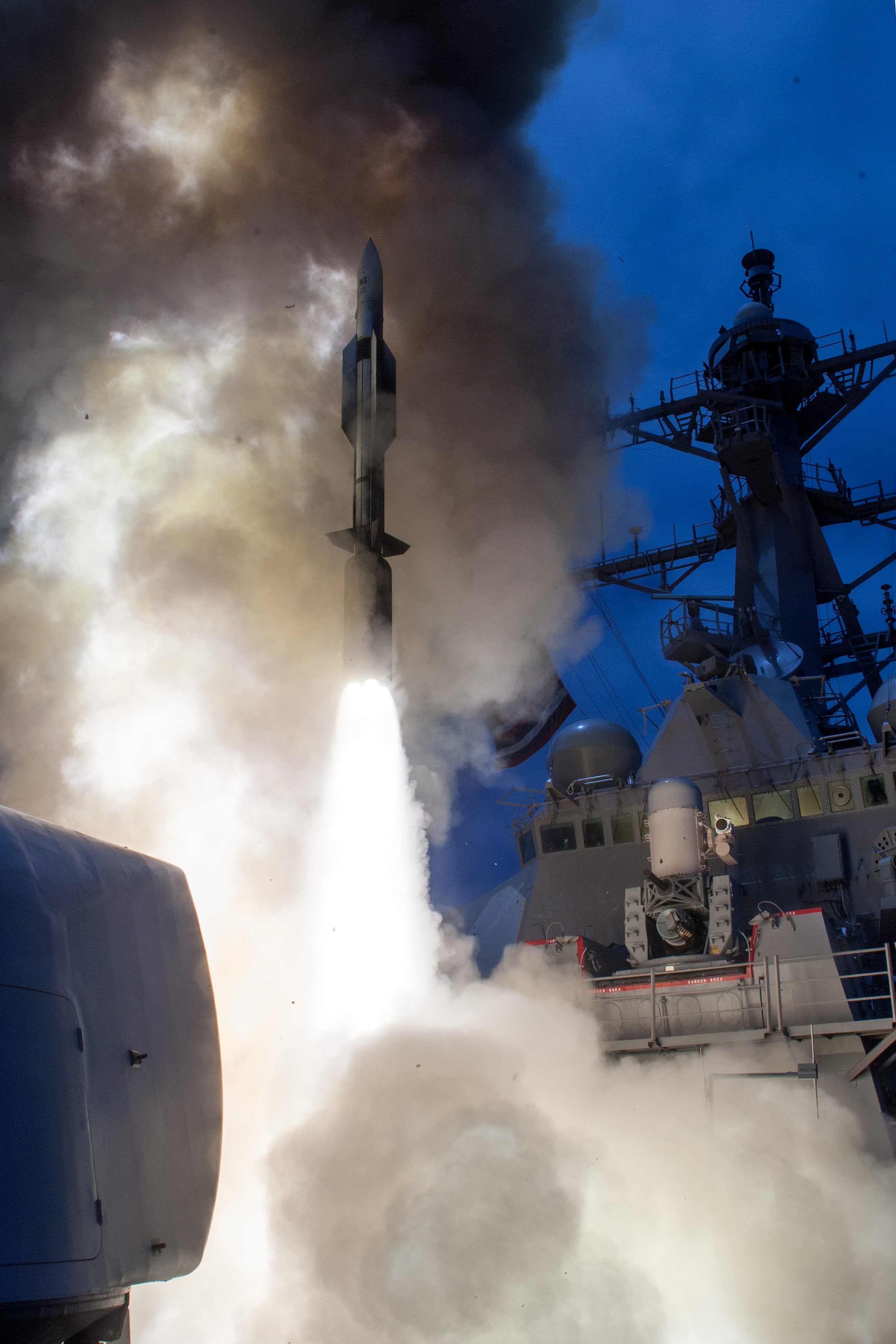
The USS John Paul Jones test-fires an SM-6 missile from a Vertical Launch System (VLS)
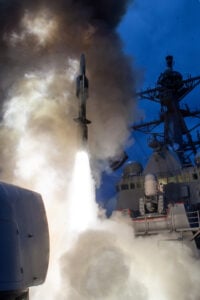 One household unit of measurement of faster weapons is the Standard Missileseries, built yesteryear Raytheon for the Navy. Fast in addition to agile because they were developed to shoot downwardly incoming aircraft in addition to cruise missiles, Standard variants receive got evolved to kill ballistic missiles (SM-3) in addition to fifty-fifty warships (SM-6). Tom Karako, caput of the missile defence programme at CSIS, proposes a hybrid of the SM-6’s multipurpose seeker in addition to the SM-3’s 1,350-mile-range booster that could strike targets ashore, launched from either ships or dry reason alongside tremendous speed.
 The traditional solution for high speed, however, is the ballistic missile. Ballistic missiles are blisteringly fast, alongside speeds around 15,000 mph, almost Mach 20. But their rocket boosters make tremendous heat, making launches detectable yesteryear satellite. Once the rockets laissez passer on the axe out, the reentry vehicle carrying the warhead tin no longer maneuver, instead next a predictable parabolic (ballistic) course.
Ballistic missiles are soundless much harder than cruise missiles to shoot down, requiring specialized sensors in addition to interceptors rather than criterion anti-aircraft systems, but both the U.S. in addition to Russian Federation receive got invested heavily in anti-ballistic missile defense. To defeat these defenses, a of late leaked Pentagon written report suggests modifying a traditional ballistic missile alongside a Trajectory Shaping Vehicle (TSV): an advanced reentry vehicle that tin maneuver unpredictably equally it carries the warhead to the target.
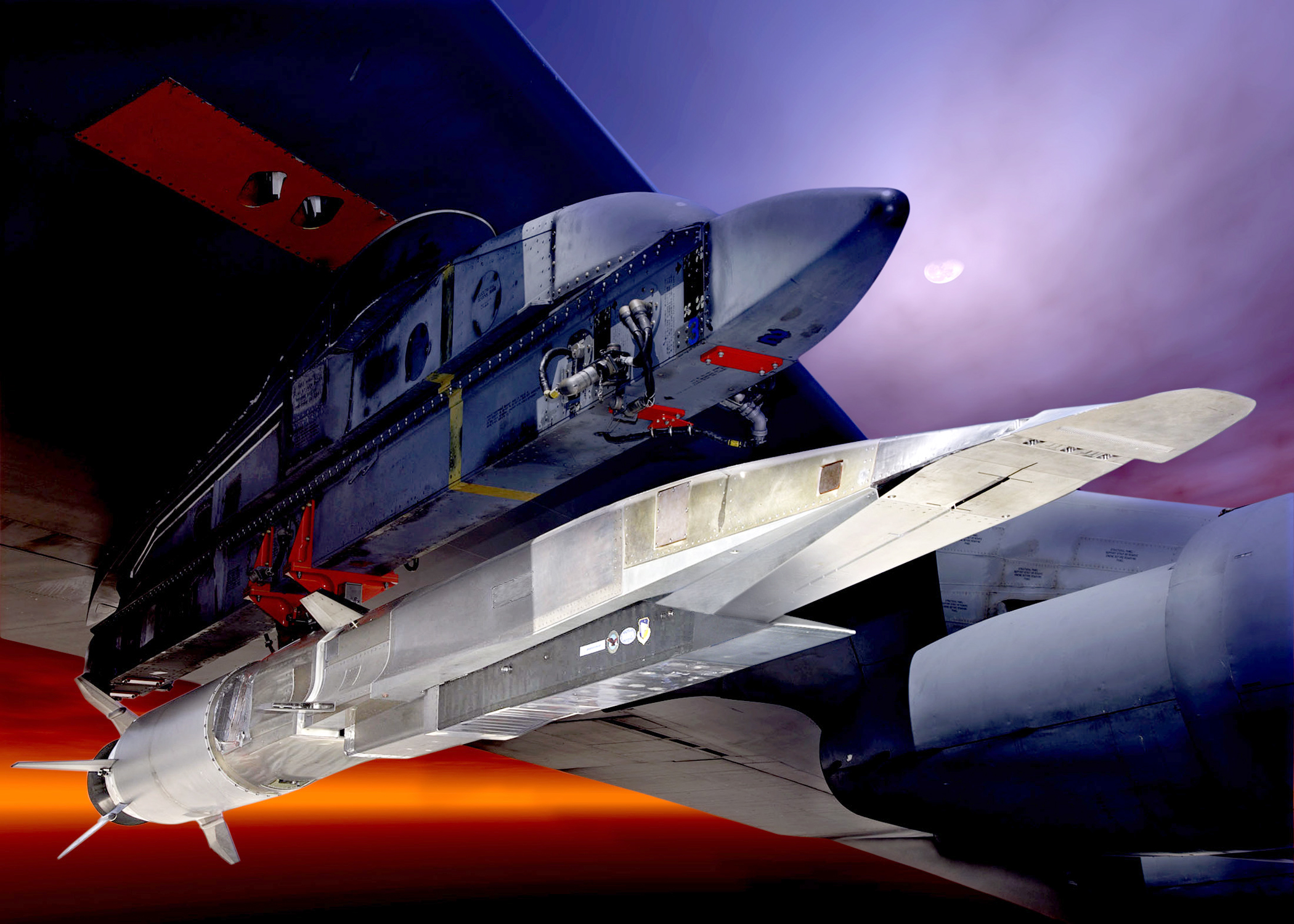
X-51 hypersonic essay vehicle prepare for launch from the fly of a B-52 bomber
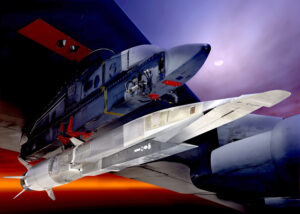 But the Pentagon’s R&D chief, Mike Griffin, has made his overstep priority a to a greater extent than radical solution: hypersonics. The term exactly agency “faster than Mach 5,” but it unremarkably refers to a so-called boost-glide vehicle that skips inwards in addition to out of the atmosphere similar a stone across a pond. Neither ballistic nor cruise, these hypersonic weapons would hold out slower than ballistic missiles, but faster than cruise missiles, in addition to also highly maneuverable. That combination could aid hypersonics both penetrate advanced anti-missile defenses — which both Russian Federation in addition to China possess — in addition to hitting moving targets at extreme ranges earlier they tin relocate — a item work inwards the vast Pacific.
 The work alongside all these high-speed options is that, different subsonic cruise missiles, the U.S. doesn’t receive got them today. H5N1 modified Standard Missile powerfulness require relatively piffling evolution time, which is why CSIS’s Karako favors it, but hypersonics stay experimental.
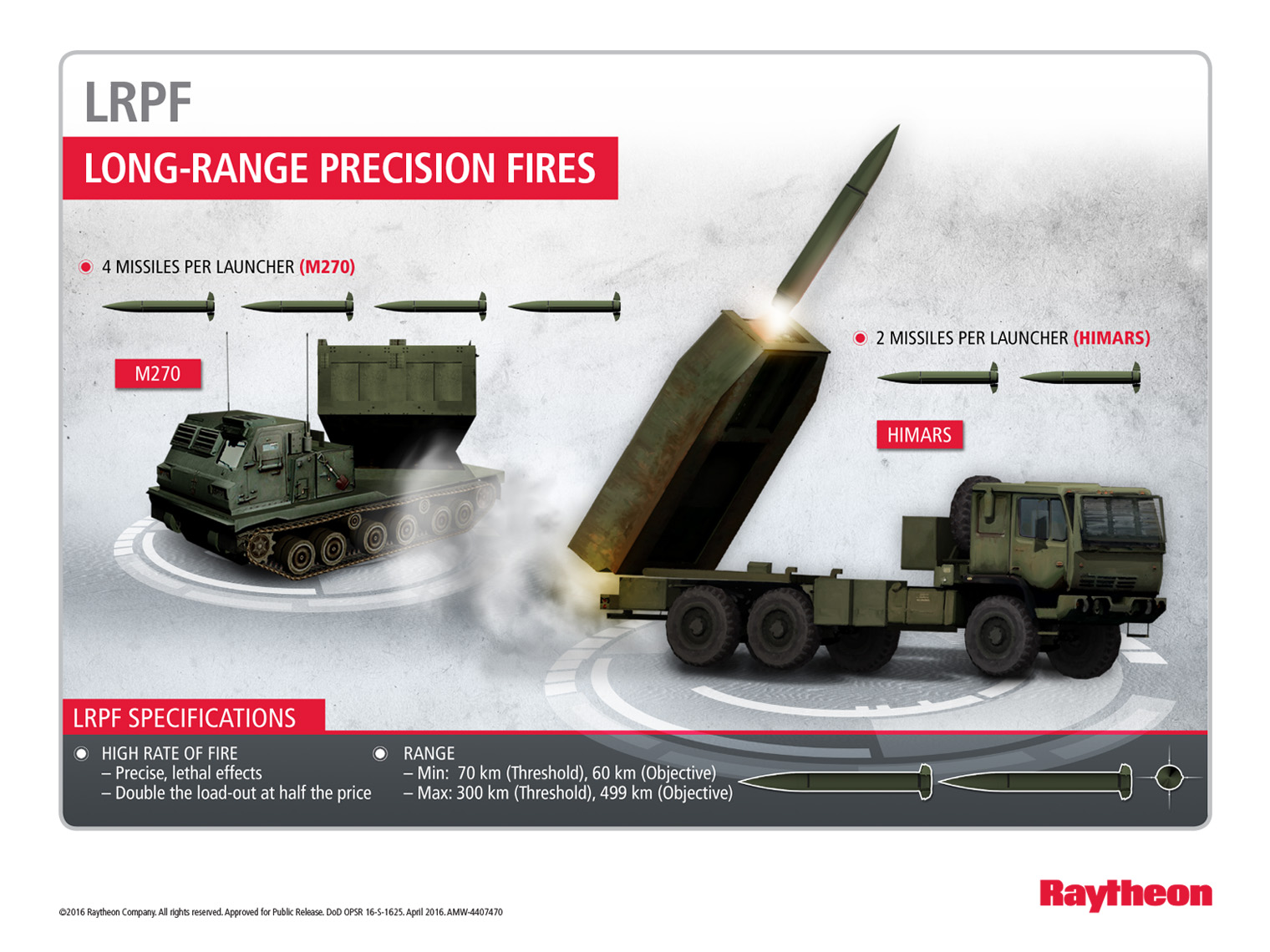
Ballistic missiles, yesteryear contrast, are old tech, but the U.S. doesn’t receive got the correct kinds anymore. With a 6,000-mile range, an intercontinental Minuteman III would hold out overkill for fifty-fifty most Pacific missions — non to advert the potential the enemy would fault it for a nuke. The U.S. destroyed its final intermediate-range ballistic missile (IRBM), the Army’s Pershing II, inwards accordance alongside the INF Treaty. The Army is instantly developing a novel ballistic Precision Strike Missile. While the PRSM pattern is currently constrained to 310 miles yesteryear the INF, the Army has said increasing the arrive at would hold out straightforward.
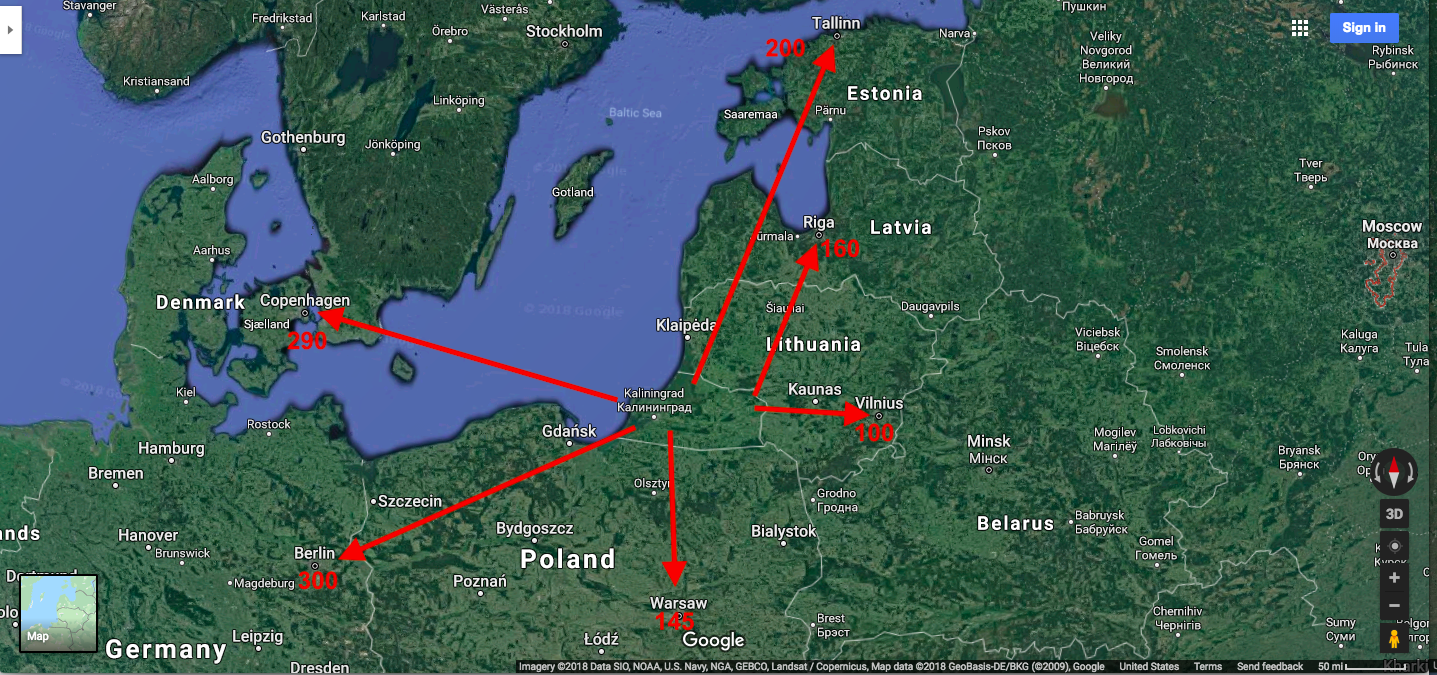
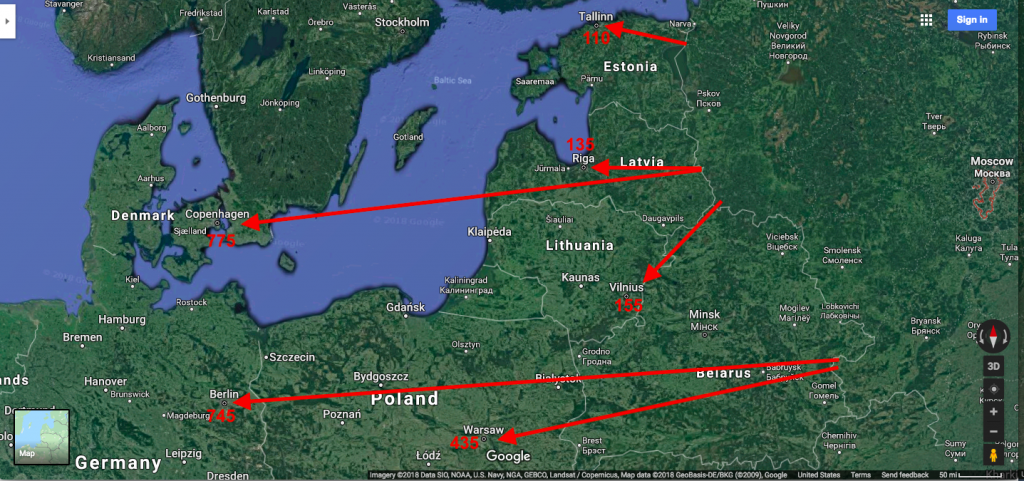
Approximate ranges inwards miles betwixt the Russian enclave inwards Kaliningrad in addition to select NATO capitals. SOURCE: Google Maps
Europe vs. Pacific
So which missiles should the Army create for which mission?
“There’s much to a greater extent than lucrative targets to hold out constitute inwards the Pacific alongside Chinese vessels,” Heritage’s Spoehr told me. “In Europe….I don’t come across the high-value target.”
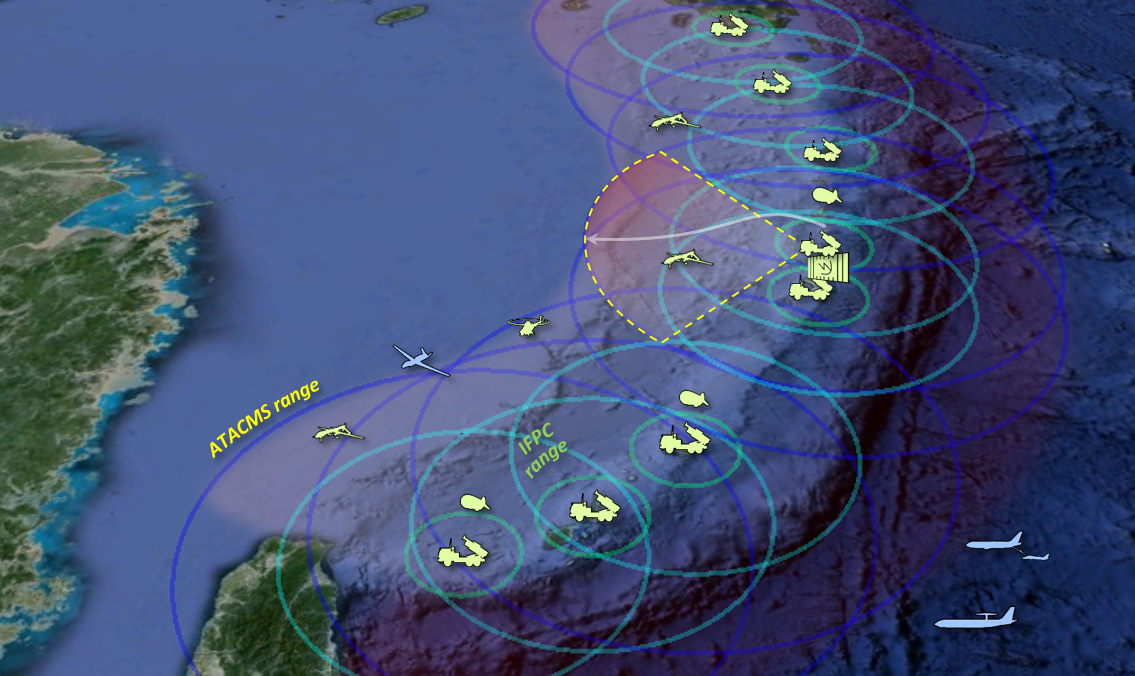
Land-based missiles deployed at “Expeditionary Advance Bases” could bird a virtual wall against Chinese aggression (CSBA graphic)
 The vast distances of the Pacific require speed in addition to range, whose toll limits the expose the U.S. tin afford — but the primary targets would hold out Chinese warships, which are expensive too. While larger than the U.S. fleet, the Chinese navy is heavy on coastal patrol arts and crafts in addition to low-cal on larger vessels, both the seagoing warships required to secure its stone oil imports from Mideast in addition to the amphibious transports required to seize disputed islands or Taiwan. All told, the Chinese power-projection fleet is almost 151 high-value targets — 1 aircraft carrier, 23 destroyers, 52 frigates, 23 corvettes, in addition to 52 amphibious ships of diverse sizes, yesteryear the Pentagon’s 2016 estimate — that could justify edifice several hundred long-range, high-speed, high-cost missiles: souped-up SM-6s, a novel ballistic missile similar PRSM, and/or hypersonic boost-glide vehicles.
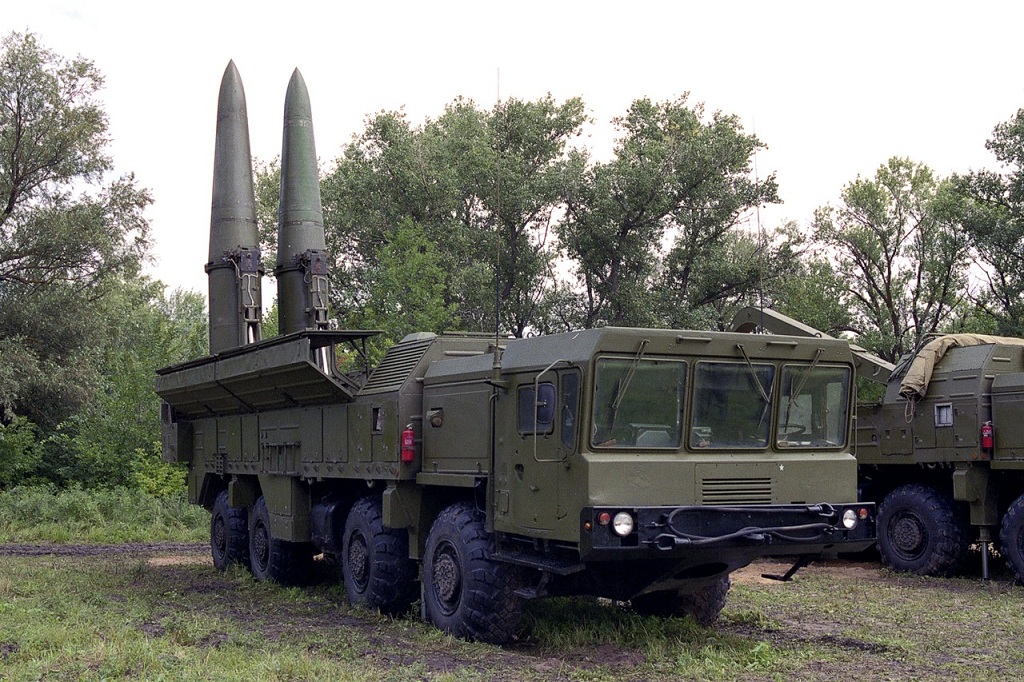
 Russian Iskander tactical nukes inwards Kaliningrad
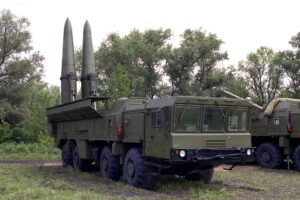 By contrast, Russian troops tin exactly arrive their vehicles in addition to drive to NATO territory. That presents a much larger expose of individually much less valuable targets: thousands of missile launchers, ascendence vehicles, battle tanks, troop carriers, provide trucks, in addition to more, many of them yesteryear necessity inside a few hundred miles of the front end line. Killing them would require less powerful, shorter-ranged, in addition to thus less expensive missiles, which would hold out easier to afford inwards the huge numbers required. In the close term, that agency ground-launched versions of electrical flow cruise missiles: JASSM-ER for well-defended targets inside 600 miles, Tomahawks for lighter defenses in addition to longer ranges. In the longer term, these would hold out joined yesteryear the Army’s ballistic PRSM in addition to maybe yesteryear projectiles from the proposed Strategic Long-Range Cannon.
 Raytheon’s proposal for the novel Precision Strike Missile (PRSM), formerly the Long-Range Precision Fires (LRPF) weapon.
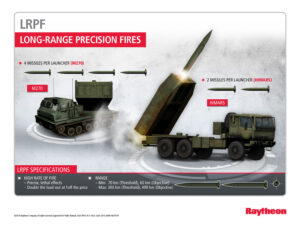 There would sure hold out overlap betwixt the 2 theaters’ missile forces. The primary targets inwards Europe, in addition to of import secondary ones inwards the Pacific, would hold out the enemy’s air-defense systems. While the Army has argued it needs hypersonics to hitting a small-scale expose of the hardest targets, such equally buried bunkers, it envisions using a larger expose of less exquisite weapons to hitting the larger numbers of to a greater extent than vulnerable targets on the surface: radars, missile launchers, in addition to mobile ascendence posts.
 Decimate these air defenses, in addition to the non-stealthy aircraft that brand upward the vast bulk of U.S. in addition to allied air powerfulness tin strike at will. That’s crucial because land-based missiles aren’t the best solution to all armed services problems. If U.S. aircraft tin loiter over hostile territory, they tin instruct correct on overstep of targets in addition to hitting them alongside short-range missiles or fifty-fifty ordinary “gravity” bombs. Those munitions are both to a greater extent than responsive in addition to less expensive than land-based missiles that must comprehend long distances to attain their targets — a peculiarly astute work inwards the Pacific.
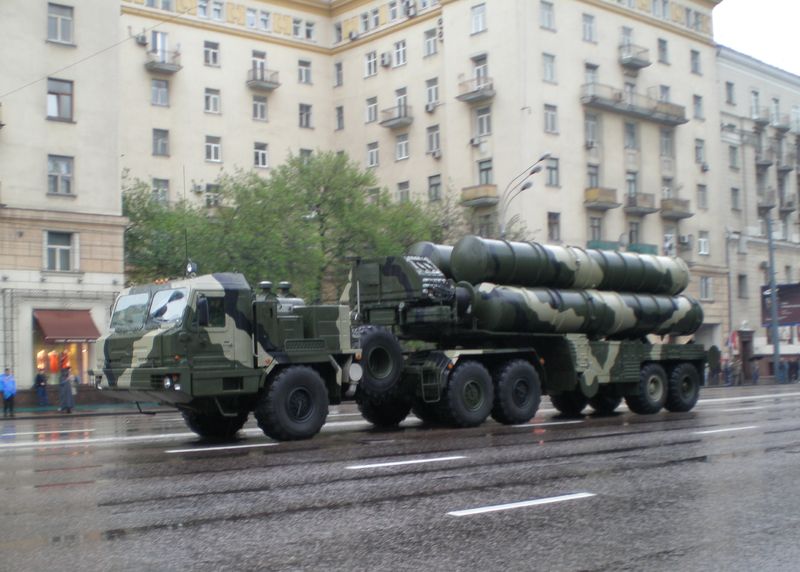
Russia S-400 Triumf anti-aircraft missile system
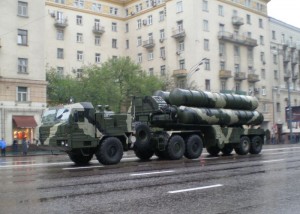 “In the Pacific, (land-based) missiles would necessitate to receive got much longer ranges than weapons postured inwards Europe,” said Mark Gunzinger of the Center for Strategic & Budgetary Assessments. “As a result, they would receive got to hold out larger in addition to likely quite a flake to a greater extent than expensive — maybe to the betoken that they would non hold out useful inwards real large numbers, relative to bomber aircraft that tin behave large payloads of less expensive standoff weapons.”
 By contrast, “the Baltic states in addition to much of Poland are covered yesteryear Russian long-range strategic SAMs (Surface-to-Air Missiles): S-300s, S-400s, in addition to inwards the time to come S-500s,” Gunzinger said. “A time to come U.S. Army equipped alongside long-range precision fires — greater than 500 km arrive at — could play a major role inwards suppressing Russians IADS (Integrated Air Defense Systems), enabling NATO air forces to penetrate.”
Once the U.S. in addition to its allies ascendence the skies, they’re good on their way to winning the state of war on the Earth — but inwards this new era of warfare, Earth forces may receive got to nail a path through the skies for the air forces to follow.
Buat lebih berguna, kongsi: